
Power Quality Improvement in a Distribution Network Using Unified Power Quality Conditioner (UPQC)
Abstract
The proliferation of non-linear loads and the integration of distributed generation sources have led to a deterioration in Power Quality (PQ) within distribution networks. Voltage sags, harmonics, and flicker are prevalent issues that not only affect the performance of sensitive equipment but also result in economic losses for utilities and consumers alike. Traditional PQ improvement methods often fall short in addressing these multifaceted challenges, necessitating the exploration of more sophisticated solutions. The Unified Power Quality Conditioner (UPQC) emerges as a promising technology that can simultaneously address multiple PQ issues. This paper investigated the efficacy of UPQC in enhancing PQ within distribution networks, thereby providing a robust framework for its implementation. The study employed a structured approach to literature selection and analysis, adhering to established guidelines for systematic reviews in engineering. The search strategy involved querying multiple databases using keywords such as "UPQC" " PQ" "distribution networks," and "systematic review." Inclusion criteria were established to focus on empirical studies that specifically addressed the performance of UPQC in enhancing PQ. The analysis was conducted using qualitative synthesis to identify common themes and quantitative metrics to assess the impact of UPQC on various PQ parameters. From the findings, UPQC was found to effectively reduce voltage sags and swells, with studies reporting significance improvements in voltage stability. The study also revealed that UPQC has the ability of mitigating harmonics, or significantly reducing the Total Harmonic Distortion (THD) levels. Furthermore, the study indicated that implementation of UPQC is associated with a marked decrease in flicker severity, contributing to improved consumer satisfaction and equipment longevity. However, the variability in performance outcomes across different studies suggests that the effectiveness of UPQC is contingent upon specific operational contexts and configurations.
Keywords:Power qualityDistribution networkTotal harmonic distortionUnified power quality conditioner
1. Introduction
The increasing reliance on sensitive electronic devices and the proliferation of Renewable Energy Sources (RES) have intensified the demand for high-quality power in distribution networks. Power Quality (PQ) issues, such as voltage sags, swells, harmonics, and flicker, can lead to significant economic losses and operational inefficiencies [1]. The Unified Power Quality Conditioner (UPQC) is a versatile device designed to mitigate these issues by providing both series and shunt compensation. PQ refers to the characteristics of the electrical power supply that enable electrical equipment to function in their intended manner without significant loss of performance or life [2], [3]. Poor PQ can manifest in various forms, including voltage sags, swells, harmonics, flicker, and interruptions, which can adversely affect both the reliability and efficiency of electrical systems. The UPQC is an advanced power electronic device designed to enhance PQ in distribution networks by simultaneously addressing voltage and current-related issues [4]. It is a power electronic device that integrates the functionalities of both a series and a shunt compensator, allowing it to mitigate disturbances in both voltage and current waveforms in a distribution network. The UPQC consists of two primary components: a series inverter and a shunt inverter, connected through a common Direct Current (DC) link. The series inverter is responsible for voltage regulation and harmonic compensation, while the shunt inverter manages reactive power compensation and current harmonics [5], [6]. This dual functionality makes the UPQC a versatile solution for improving PQ in modern electrical distribution systems. The operational principles of UPQC are grounded in advanced power electronics and control strategies. The series converter employs a Voltage-Source Inverter (VSI) to inject a compensating voltage into the distribution network, effectively correcting voltage sags and swells while filtering harmonics [7], [8]. The shunt converter, also a VSI, operates to absorb or supply reactive power, thus maintaining the Power Factor (PF) and mitigating current harmonics. The common DC link between the two converters allows for energy exchange, optimizing the overall performance of the UPQC. The control strategy of UPQC typically involves real-time monitoring of voltage and current waveforms, employing techniques such as Synchronous Reference Frame (SRF) theory to extract the fundamental components and identify disturbances [9]. The control algorithms then generate the necessary compensation signals for both converters, ensuring that the output PQ meets predefined standards. The concept of PQ conditioning has evolved significantly since the late 20th century. Early solutions primarily focused on either series or shunt compensation, leading to the development of devices such as Static VAR Compensators (SVC) and Active Power Filters (APF) [10], [11]. The introduction of the UPQC in the late 1990s marked a paradigm shift, as it combined the functionalities of both series and shunt devices into a single unit. Today, UPQC is recognized as a vital component in smart grid initiatives, where PQ is paramount for the integration of distributed generation and RES.
2. Technological Advancements
Recent milestones in UPQC technology can be categorized into the following key areas:
I. Control strategies: the development of robust control algorithms, such as the Instantaneous Reactive Power Theory (IRPT) and SRF theory, has significantly improved the dynamic response of UPQC systems. These strategies enable real-time monitoring and adaptive compensation, thereby enhancing the overall PQ [12], [13].
II. Modular design: the shift towards modular UPQC designs has facilitated scalability and flexibility in deployment. Modular configurations allow for tailored solutions that can be adapted to specific distribution network requirements, thereby optimizing performance and cost-effectiveness [14].
III. Integration with RES: the increasing penetration of RES into distribution networks has prompted research into the integration of UPQC with distributed generation systems [15], [16]. This integration not only enhances PQ but also contributes to the stability of the grid by providing ancillary services.
IV. Energy storage systems: the incorporation of energy storage systems within UPQC frameworks has emerged as a significant milestone. Energy storage enhances the capability of UPQC to manage transient disturbances and provides a buffer against fluctuations in PQ, thereby improving the resilience of distribution networks [17], [18].
3. Metrics for Evaluating the Performance of Unified Power Quality Conditioner
The increasing complexity of modern electrical systems necessitates the deployment of advanced PQ improvement devices. Among these, the UPQC has emerged as a pivotal solution for mitigating PQ issues. However, the effectiveness of UPQC systems must be quantitatively assessed to ensure their reliability and efficiency. This can be achieved via the following metrics:
I. Total Harmonic Distortion (THD): this is a critical metric that quantifies the distortion of the voltage or current waveform compared to its fundamental frequency. High THD levels can lead to equipment malfunction, overheating, and reduced lifespan of electrical devices. The UPQC's ability to minimize THD is indicative of its performance in harmonics mitigation [19]. A lower THD signifies a cleaner power supply, which is essential for sensitive electronic equipment. The assessment of THD not only reflects the UPQC's effectiveness in harmonic filtering but also serves as a benchmark for compliance with international PQ standards [20]. Thus, THD can be expressed mathematically as:
√ 2 2 2 V2 + V3+ V4 . . .
THD = , (1)
where THD = total harmonic distortion.
Vn = RMS voltage of the nth harmonic.
II. Voltage regulation: this is another vital parameter that measures the ability of the UPQC to maintain a stable output voltage despite variations in load conditions. Effective voltage regulation ensures that the voltage supplied to end-users remains within acceptable limits, thereby preventing equipment damage and operational inefficiencies [21]. The UPQC achieves this through its integrated series and shunt converters, which dynamically adjust the voltage levels. A robust voltage regulation capability is essential for the UPQC to fulfill its role in enhancing PQ, particularly in environments with fluctuating loads [22]. Therefore, evaluating voltage regulation provides insights into the UPQC's operational reliability and its capacity to safeguard against voltage-related disturbances. Thus, Voltage regulation can be expressed mathematically as:
No load voltage − Full load voltage
Voltage regulation = . (2)
No load voltage
III. Response time: the response time of a UPQC system is a critical metric that reflects its agility in addressing transient disturbances and maintaining PQ. A rapid response time is essential for effectively mitigating voltage sags and swells, which can occur suddenly and have detrimental effects on sensitive loads. The ability of the UPQC to quickly detect and respond to these disturbances is a testament to its design and control strategies [23]. A shorter response time enhances the overall resilience of the power system, ensuring that PQ is maintained even in the face of abrupt changes. Consequently, assessing response time is crucial for understanding the UPQC's performance in real-time applications.
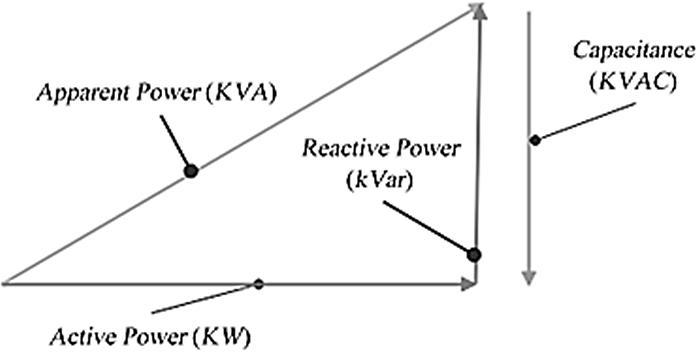
IV. PF improvement: PF is a crucial metric that quantifies the efficiency of power usage in electrical systems. A low PF indicates poor utilization of electrical power, leading to increased losses and potential penalties from utility providers. The UPQC can significantly enhance PF by compensating for reactive power demands and harmonics [23]. By quantitatively assessing PF improvement, stakeholders can gauge the economic benefits of UPQC deployment, as higher PF translates to reduced energy costs and improved system efficiency. Thus, PF should be considered a vital metric in evaluating UPQC performance which can be expressed mathematically as:
Active Power
Power Factor (PF) = cos(θ) = . (3)
Apparent Power
Reactive Power (Q) = Apparent Power × sin(θ). (4)
Apparent Power (S) = √(Active Power² + Reactive Power²) . (5) The Phasor diagram of the power with the reactive power after and before PF correction is illustrated in Fig.
4. Factors Affecting the Performance Unified Power Quality Conditioner
The effectiveness of UPQC is contingent upon the following interrelated factors that can either enhance or impede its performance.
I. System design: the design of the UPQC system is a fundamental determinant of its performance. Key design considerations include the topology of the power converter, the rating of the components, and the configuration of the energy storage system. A well-designed UPQC must balance the trade-offs between cost, efficiency, and performance. For instance, the choice of converter topology-whether a VSI or a Current-Source Inverter (CSI)-can significantly influence the dynamic response and harmonic mitigation capabilities of the UPQC [24]. Furthermore, the sizing of energy storage elements, such as capacitors or batteries, is critical; inadequate sizing can lead to insufficient energy reserves for compensating disturbances, thereby undermining the UPQC's effectiveness [25].
II. Control strategies: control strategies employed in UPQC operation are pivotal in determining its responsiveness to PQ issues. Advanced control algorithms, such as IRPT and SRF theory, have been developed to enhance the performance of UPQC. These strategies dictate how the UPQC reacts to voltage sags, swells, and harmonics in real-time. The choice of control strategy can affect the speed of response, stability, and overall reliability of the UPQC system [26]. Moreover, the implementation of adaptive control techniques can further improve performance by allowing the UPQC to adjust to varying load conditions and disturbances dynamically.
III. Component selection: the selection of components within the UPQC architecture is another critical factor influencing its performance. High-quality power electronic devices, such as Insulated Gate Bipolar Transistors (IGBTs) and diodes, are essential for ensuring efficient operation and longevity of the system. The thermal management of these components also plays a crucial role; inadequate cooling can lead to overheating, resulting in reduced efficiency and potential failure [27]. Additionally, the choice of passive components, such as inductors and capacitors, must align with the operational requirements of the UPQC to ensure optimal filtering and energy storage capabilities.
IV. Environmental conditions: environmental factors, including temperature, humidity, and electromagnetic interference, can significantly impact the performance of UPQC systems. High ambient temperatures can adversely affect the thermal performance of power electronic devices, leading to de-rating and reduced operational efficiency. Similarly, high humidity levels can increase the risk of corrosion and insulation failure, compromising the reliability of the UPQC [28]. Furthermore, electromagnetic interference from nearby equipment can disrupt the control signals and operation of the UPQC, necessitating robust shielding and grounding practices to mitigate these effects.
5. Power Quality Disturbances
Economically, disturbances can lead to increased operational costs due to equipment failures and maintenance. For industries reliant on precision machinery, even minor disturbances can result in substantial financial losses. Operationally, PQ issues can disrupt production processes, leading to inefficiencies and reduced output. Socially, the implications of PQ disturbances can affect the quality of life, particularly in residential areas where flicker and harmonics may disrupt daily activities [29]. Moreover, the integration of RES into the grid introduces additional complexities in PQ management. Fluctuations in generation from solar and wind sources can exacerbate existing disturbances, necessitating a reevaluation of current PQ standards and practices. The various types of PQ disturbances are as follows:
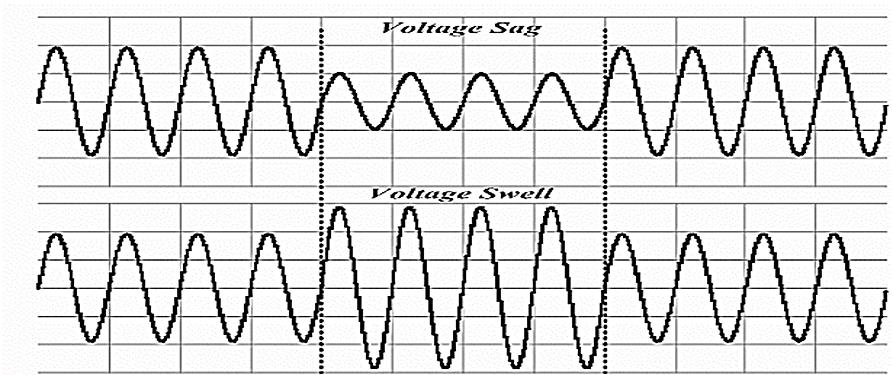
I. Voltage sags and swells: voltage sags are short-duration reductions in voltage levels, typically caused by sudden increases in load or faults in the system. Conversely, voltage swells are temporary increases in voltage, often resulting from sudden load reductions or capacitor switching. Both phenomena can lead to equipment malfunction, particularly in sensitive electronic devices [30]. The argument here is that the prevalence of voltage sags and swells necessitates the implementation of voltage regulation technologies, such as dynamic voltage restorers, to safeguard sensitive equipment.
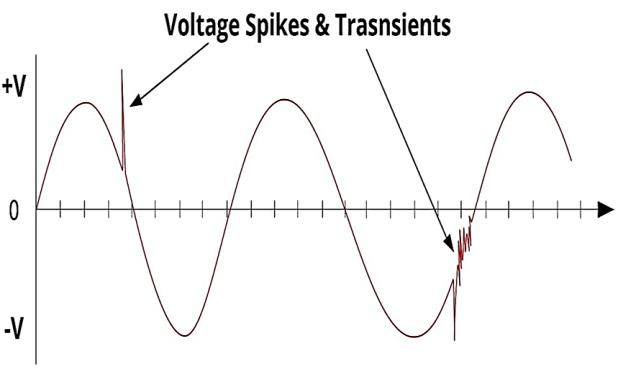
II. Transients: transients are brief, high-frequency voltage spikes that can occur due to lightning strikes, switching operations, or faults. These disturbances can cause significant damage to electrical equipment, leading to costly repairs and downtime [32]. The argument posits that the adoption of surge protection devices and robust grounding techniques is imperative to mitigate the risks associated with transients, thereby enhancing the resilience of electrical systems.
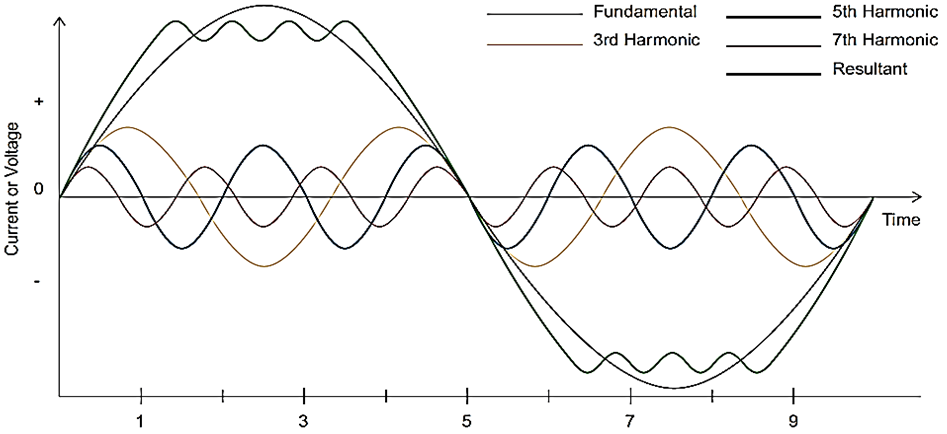
III. Harmonics: harmonics arise from non-linear loads, such as variable frequency drives and computer power supplies, which distort the sinusoidal waveform of the current. The presence of harmonics can lead to overheating of equipment, increased losses in transformers, and interference with communication lines. This study argues for the necessity of harmonic filtering solutions, such as passive and active filters, to maintain PQ and ensure the longevity of electrical infrastructure [34].
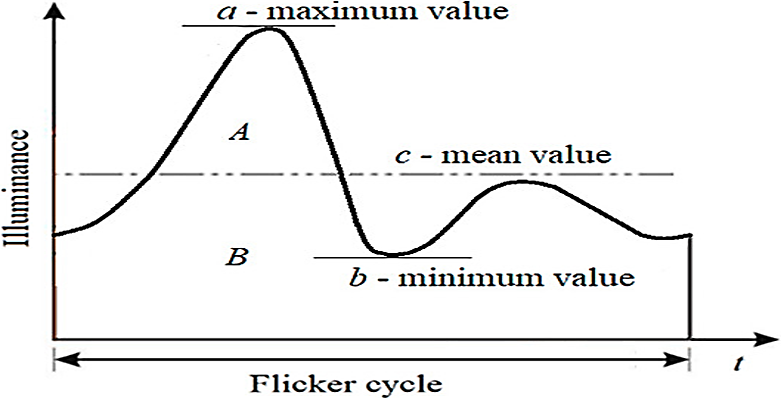
IV. Flicker: flicker refers to the perceptible fluctuations in lighting intensity, primarily caused by rapid changes in load. While often considered a nuisance, flicker can have significant psychological and physiological effects on individuals, particularly in industrial settings [36]. The argument here is that addressing flicker through load management and advanced lighting technologies is essential for maintaining a conducive working environment and enhancing productivity.
6. Steady State Power Flow Analysis Using Unified Power Quality Conditioner Systems
PQ has become a paramount concern in electrical engineering, particularly as the demand for uninterrupted and high-quality power supply escalates. The UPQC, a sophisticated power electronic device, integrates the functionalities of both a series and a shunt converter to mitigate voltage sags, harmonics, and other disturbances in the power system. Steady state power flow analysis refers to the examination of the electrical power system under stable operating conditions, where all system variables remain constant over time [38]. This analysis typically involves the application of mathematical models to predict the flow of electrical power through various components of the system, including generators, transformers, transmission lines, and loads. In the context of UPQC systems, steady state analysis becomes particularly relevant as it allows for the assessment of how the UPQC can effectively manage PQ issues without causing significant disruptions to the overall system. The UPQC operates by employing two primary converters: the series converter, which regulates voltage and mitigates voltage sags and swells, and the shunt converter, which compensates for reactive power and mitigates current harmonics [5]. By analyzing the steady state power flow, engineers can determine the optimal settings for these converters, ensuring that the UPQC operates efficiently while maintaining the desired PQ levels. The integration of UPQC systems into power networks presents both opportunities and challenges. Some of the primary arguments for conducting steady state power flow analysis are:
I. Its ability to enhance the reliability of power delivery: by accurately modeling the interactions between the UPQC and the power system, engineers can identify potential issues before they manifest as outages or equipment failures [39]. This proactive approach is particularly crucial in systems with high penetration of RES, where variability and unpredictability can lead to significant PQ challenges.
II. Steady state power flow analysis facilitates the optimization of UPQC performance: by understanding the power flow dynamics, engineers can fine-tune the control strategies of the UPQC, ensuring that it responds effectively to varying load conditions and disturbances [18]. This optimization not only improves PQ but also enhances the overall efficiency of the power system, reducing losses and operational costs.
III. Steady state analysis provides a framework for evaluating the economic feasibility of deploying UPQC systems: By simulating various scenarios and assessing the impact of UPQC on PQ metrics, stakeholders can make informed decisions regarding investments in PQ solutions [40]. This economic perspective is vital in an era where utilities and consumers alike are increasingly focused on cost-effective solutions to PQ issues.
7. Functions of Unified Power Quality Conditioner
The UPQC serves the following functions that collectively enhance PQ in distribution networks:
I. It provides voltage regulation by compensating for voltage sags and swells, ensuring that the voltage supplied to the load remains within acceptable limits [4]. This is particularly important for sensitive equipment that requires stable voltage levels for optimal operation.
II. The UPQC mitigates harmonic distortion by filtering out unwanted harmonics from the supply current.
Harmonics can lead to overheating, equipment malfunction, and increased losses in electrical systems [41]. By maintaining a clean current waveform, the UPQC contributes to the longevity and reliability of electrical equipment.
III. The UPQC improves the PF by supplying or absorbing reactive power as needed. A poor PF can result in increased losses and reduced capacity in distribution networks. By optimizing the PF, the UPQC enhances the efficiency of the entire system, leading to cost savings and improved performance.
IV. The UPQC enhances the overall reliability of the power supply. By addressing multiple PQ issues simultaneously, it reduces the likelihood of equipment failures and downtime, thereby improving the operational efficiency of industrial and commercial facilities [20].
8. Applications of Unified Power Quality Conditioner in Distribution Networks
The various applications of UPQC in distribution networks are highlighted as follows:
I. Voltage regulation: one of the primary applications of UPQC is voltage regulation. Voltage sags and swells can adversely affect sensitive equipment, leading to operational disruptions. The UPQC employs its series compensator to inject or absorb voltage, thereby maintaining a stable voltage level at the Point of Common Coupling (PCC) [42]. This capability is particularly crucial in industrial settings where production processes are sensitive to voltage fluctuations.
II. Harmonic mitigation: harmonics generated by non-linear loads can distort the current waveform, leading to overheating and reduced efficiency of electrical equipment. The shunt compensator of the UPQC effectively filters out these harmonics, ensuring that the current drawn from the grid remains sinusoidal [34]. This application not only protects equipment but also enhances the overall PF of the distribution network.
III. Load balancing: in many distribution networks, unbalanced loads can lead to inefficiencies and increased losses. The UPQC can actively balance the load across the three phases by redistributing power, thus minimizing neutral currents and enhancing system reliability. This load balancing capability is essential for maintaining the longevity of transformers and other critical infrastructure [35].
IV. Flicker mitigation: flicker, caused by rapid changes in load, can be detrimental to both human comfort and equipment performance. The UPQC can smooth out these fluctuations by dynamically adjusting the voltage at the PCC, thereby providing a stable supply to sensitive loads. This application is particularly relevant in environments with fluctuating loads, such as in industrial manufacturing processes [37]. V. Integration of RES: as the integration of RES into the grid becomes more prevalent, maintaining PQ becomes increasingly challenging. The UPQC can facilitate the smooth integration of RES by compensating for the variability and intermittency associated with sources such as solar and wind [43]. By ensuring a stable voltage and mitigating harmonics, the UPQC supports the transition to a more sustainable energy landscape.
VI. Enhancement of system efficiency: the deployment of UPQC not only addresses specific PQ issues but also contributes to the overall efficiency of the distribution network. By improving voltage stability, reducing losses, and enhancing the PF, UPQC can lead to significant reductions in operational costs [16]. This economic argument for UPQC adoption is particularly compelling for utilities seeking to optimize their infrastructure investments.
9. Conclusion
The imperative for enhanced PQ in modern electrical distribution networks cannot be overstated, particularly in the context of increasing reliance on sensitive electronic devices and the proliferation of RES. This study has critically examined the role of the UPQC as a multifaceted solution to the challenges posed by PQ disturbances. One of the central arguments presented in this review is that the UPQC not only addresses immediate PQ issues but also contributes to the long-term sustainability of distribution networks. By employing advanced control strategies and real-time monitoring, the UPQC enhances the resilience of the grid against disturbances, thus fostering a more reliable energy infrastructure. This capability is particularly crucial in light of the increasing integration of distributed generation sources, which often introduce variability and unpredictability into the power system. Moreover, the economic implications of deploying UPQC technology warrant significant consideration. While the initial investment may be substantial, the long-term benefits-such as reduced downtime, lower maintenance costs, and improved customer satisfaction can outweigh these costs. This economic argument is further bolstered by the potential for UPQC systems to facilitate compliance with stringent PQ standards, thereby avoiding penalties and enhancing the overall operational efficiency of utility providers. However, the implementation of UPQC systems is not without challenges. The complexity of design, the need for skilled personnel for operation and maintenance, and the integration with existing infrastructure pose significant hurdles. These challenges necessitate a comprehensive approach that includes policy support, investment in training, and the development of standardized protocols for UPQC deployment. Future research should focus on optimizing UPQC designs, exploring innovative control strategies, and assessing the long-term impacts of UPQC deployment on both technical and economic fronts.
References
- [1] Gade, S., Agrawal, R., & Munje, R. (2021). Recent trends in power quality improvement: Review of the unified power quality conditioner. ECTI transactions on electrical engineering, electronics, and communications, 19(3), 268–288. https://doi.org/10.37936/ecti-eec.2021193.244936
- [2] Heenkenda, A., Elsanabary, A., Seyedmahmoudian, M., Mekhilef, S., Stojcevski, A., & Ab Aziz, N. F. (2023). Unified power quality conditioners based different structural arrangements: A comprehensive review. IEEE access, 11, 43435–43457. https://doi.org/10.1109/ACCESS.2023.3269855
- [3] Joshi, N., & Jain, B. B. (2022). Review on design of improved unified power quality conditioner for power quality improvement. International journal on recent and innovation trends in computing and communication, 10(2), 21–29. https://doi.org/10.17762/ijritcc.v10i2.5519
- [4] Ali, Z. M., Ćalasan, M., Jurado, F., & Aleem, S. H. E. A. (2024). Complexities of power quality and harmonic-induced overheating in modern power grids studies: Challenges and solutions. IEEE access, 12, 151554 - 151597. https://doi.org/10.1109/ACCESS.2024.3477729
- [5] Qasim, A. Y., Tahir, F. R., & Alsammak, A. N. B. (2024). Improving power quality in distribution systems using UPQC: An overview. Journal européen des systèmes automatisés, 57(2), 311-322. https://doi.org/10.18280/jesa.570201
- [6] Sarita, N. C. S., Reddy, S. S., & Sujatha, P. (2023). Control strategies for power quality enrichment in distribution network using UPQC. Materials today: Proceedings, 80, 2872–2882. https://doi.org/10.1016/j.matpr.2021.07.053
- [7] Mbuli, N. (2023). Dynamic voltage restorer as a solution to voltage problems in power systems: Focus on sags, swells and steady fluctuations. Energies, 16(19), 1-26. https://doi.org/10.3390/en16196946
- [8] Shah, M. S., Ullah, M. F., Nouman, D., Khan, M. A., Khan, T., & Waseem, M. (2024). A review on the state of the art of dynamic voltage restorer: Topologies, operational modes, compensation methods, and control algorithms. Engineering research express, 6(1), 12302. https://doi.org/10.1088/2631-8695/ad2ccb%0A%0A
- [9] Alam, S. J., & Arya, S. R. (2020). Control of UPQC based on steady state linear Kalman filter for compensation of power quality problems. Chinese journal of electrical engineering, 6(2), 52–65. https://doi.org/10.23919/CJEE.2020.000011
- [10] Ravi, T., & Sathish Kumar, K. (2022). Analysis, monitoring, and mitigation of power quality disturbances in a distributed generation system. Frontiers in energy research, 10, 1-31. https://doi.org/10.3389/fenrg.2022.989474
- [11] Akkala, N. V. K. (2022). Power electronic devices for power quality and custom power to enable end-users and distribution system operators in low voltage smart grids: The evolution of open-UPQC [Thesis]. https://www.politesi.polimi.it/handle/10589/208943
- [12] Das, S. K., Swain, S. C., Dash, R., Reddy, J., Chinthaginjala, R., Jena, R. (2024). Design and analysis of UPQC in a microgrid using model reference adaptive control ensemble with back-stepping controller. Heliyon, 10(14). https://doi.org/10.1016/j.heliyon.2024.e34140
- [13] Ahmed, H., & Çelik, D. (2024). Enhanced UPQC control scheme for power quality improvement in wave energy driven PMSG system. IEEE transactions on energy conversion, 40(1), 246-257. https://doi.org/10.1109/TEC.2024.3425954
- [14] Abdalaal, R. M., & Ho, C. N. M. (2020). Analysis and validations of modularized distributed TL-UPQC systems with supervisory remote management system. IEEE transactions on smart grid, 12(3), 2638–2651. https://doi.org/10.1109/TSG.2020.3044992
- [15] Zanib, N., Batool, M., Riaz, S., & Nawaz, F. (2022). Performance analysis of renewable energy based distributed generation system using ANN tuned UPQC. IEEE access, 10, 110034–110049. https://doi.org/10.1109/ACCESS.2022.3213948
- [16] Ray, P., Ray, P. K., & Dash, S. K. (2021). Power quality enhancement and power flow analysis of a PV integrated UPQC system in a distribution network. IEEE transactions on industry applications, 58(1), 201–
- [211] https://doi.org/10.1109/TIA.2021.3131404
- [17] Aghmadi, A., & Mohammed, O. A. (2024). Energy storage systems: Technologies and high-power applications. Batteries, 10(4), 1-21. https://doi.org/10.3390/batteries10040141
- [18] Sekhar, D. C. (2022). Hybrid UPQC for power quality management of renewable energy penetrated system. International transactions on electrical engineering and computer science, 1(2), 75–103. https://doi.org/10.62760/iteecs.1.2.2022.25
- [19] Ajenikoko, G. A., & Ojerinde, A. I. (2015). Effects of total harmonic distortion on power system equipment. Innovative systems design and engineering, 6(5), 114–120. https://scispace.com/pdf/effects-of-total-harmonic-distortion-on-power-system-257s7nm266.pdf
- [20] Mohanty, A., Ray, P. K., Das, S. R., Soudagar, M. E. M., Ramesh, S., Khan, T. M. Y., & Bashir, M. N. (2024). Enhancing power quality in contemporary utility systems: A comprehensive analysis of active power filters and control strategies. Energy reports, 11, 5575–5592. https://doi.org/10.1016/j.egyr.2024.05.033
- [21] Bindu, A., Kavin, K. S., Kumar, N., & Sharma, S. (2025). Reinventing power quality enhancement: Deep reinforcement learning control for PV-UPQC in microgrids. Electrical Engineering, 107(4), 4979-4999. https://doi.org/10.1007/s00202-024-02778-x
- [22] Vishnu, K., Srikanth, V., Rakesh, M., Nishanth, G., & Vinay, P. (2024). Advancing power quality in smart grids through tailored upqc modifications. 2024 IEEE international conference on information technology, electronics and intelligent communication systems (ICITEICS) (pp. 1–6). IEEE. https://doi.org/10.1109/ICITEICS61368.2024.10624918
- [23] Wahab, K., Rahal, M., & Achkar, R. (2021). Economic improvement of power factor correction: A case study. Journal of power and energy engineering, 9(6), 1–11. https://doi.org/10.4236/jpee.2021.96001
- [24] Mousaei, A., Gheisarnejad, M., & Khooban, M. H. (2023). Challenges and opportunities of FACTS devices interacting with electric vehicles in distribution networks: A technological review. Journal of energy storage, 73, 108860. https://doi.org/10.1016/j.est.2023.108860
- [25] Namdev, P., & Singh, R. (2023). Advances in power quality enhancement: A comprehensive review of custom power devices and mitigation strategies. 2023 3rd international conference on energy, power and electrical engineering (EPEE) (pp. 761–765). IEEE. https://doi.org/10.1109/EPEE59859.2023.10352062
- [26] Vijayshree, G. (2021). Improvement of power quality using instantaneous reactive power theory for controlling shunt active filter. 2021 international conference on circuits, controls and communications (CCUBE) (pp. 1–6) IEEE. https://doi.org/10.1109/CCUBE53681.2021.9702742
- [27] Rafin, S. M. S. H., Ahmed, R., Haque, M. A., Hossain, M. K., Haque, M. A., & Mohammed, O. A. (2023). Power electronics revolutionized: A comprehensive analysis of emerging wide and ultrawide bandgap devices. Micromachines, 14(11), 2045. https://doi.org/10.3390/mi14112045
- [28] Tabassum, S., Babu, A. R. V., & Dheer, D. K. (2024). A comprehensive exploration of IoT-enabled smart grid systems: Power quality issues, solutions, and challenges. Science and technology for energy transition, 79, 62. https://doi.org/10.2516/stet/2024056
- [29] Sharma, A., Rajpurohit, B. S., & Singh, S. N. (2018). A review on economics of power quality: Impact, assessment and mitigation. Renewable and sustainable energy reviews, 88, 363–372. https://doi.org/10.1016/j.rser.2018.02.011
- [30] Neve, V. G., Pullawar, P. V, & Kidile, C. H. (2020). Power quality issues & detection methods for voltage sag and swell. International journal of research in biosciences, agriculture and technology, 11(Spec Issue), 71–79. https://ijrbat.in/upload_papers/2211202012480110. Vijay G Neve.pdf
- [31] Bhadane, K. V, Thakre, M., & Devikar, R. (2024). Measurement and analysis of voltage sag and swell in large penetrated grid-connected wind farm. Journal of the institution of engineers (India): series B, 105(3), 713–732. https://doi.org/10.1007/s40031-024-01023-0%0A%0A
- [32] Bindi, M., Piccirilli, M. C., Luchetta, A., & Grasso, F. (2023). A comprehensive review of fault diagnosis and prognosis techniques in high voltage and medium voltage electrical power lines. Energies, 16(21), 7317. https://doi.org/10.3390/en16217317
- [33] Osipov, D. S., Lyutarevich, A. G., Gapirov, R. A., Gorunov, V. N., & Bubenchikov, A. A. (2016). Applications of wavelet transform for analysis of electrical transients in power systems: The review. Przeglad elektrotechniczny, 4, 162–165. 10.15199/48.2016.04.35 %0D
- [34] Salam, Z., Tan, P. C., & Jusoh, A. (2006). Harmonics mitigation using active power filter: A technological review. Elektrika journal of electrical engineering, 8(2), 17–26. https://www.researchgate.net/profile/Awang-Jusoh/publication/41057887
- [35] Halpin, S. M. (2018). Harmonics in power systems. In Electric power generation, transmission, and distribution (pp. 31–37). CRC Press. https://www.taylorfrancis.com/chapters/edit/10.1201/9781315222424-38/harmonics-power-systems-mark-halpin
- [36] Owen, E. L. (1996). Power disturbance and quality: Light flicker voltage requirements. IEEE industry applications magazine, 2(1), 20–27. https://doi.org/10.1109/2943.476594
- [37] Masnicki, R., Mindykowski, J., Palczynska, B., & Werner, D. (2024). Research on the flicker effect in modern light sources powered by an electrical network. Energies, 17(20), 5080. https://doi.org/10.3390/en17205080
- [38] Nikkhajoei, H., & Iravani, R. (2006). Steady-state model and power flow analysis of electronically-coupled distributed resource units. IEEE transactions on power delivery, 22(1), 721–728. https://doi.org/10.1109/TPWRD.2006.881604
- [39] Bhosale, S. S., Bhosale, Y. N., Chavan, U. M., & Malvekar, S. A. (2018). Power quality improvement by using upqc: A review. 2018 international conference on control, power, communication and computing technologies (ICCPCCT) (pp. 375–380). IEEE. https://doi.org/10.1109/ICCPCCT.2018.8574264
- [40] Chapala, S., Kumar, P. R., Lakshmi, G. S., & Devi V, V. (2024). Grid integration of pv--wind based hybrid system with upqc. 2024 IEEE international conference on smart power control and renewable energy (ICSPCRE) (pp. 1–6). IEEE. https://doi.org/10.1109/ICSPCRE62303.2024.10674900
- [41] Nagarajan, A., P, S., MV, S., & P, M. (2020). A study of UPQC: Emerging mitigation techniques for the impact of recent power quality issues. Circuit world, 47(1), 11–21. https://doi.org/10.1108/CW-09-2019-0125
- [42] Da Silva, S. A. O., Modesto, R. A., Sampaio, L. P., & Campanhol, L. B. G. (2023). Dynamic improvement of a UPQC system operating under grid voltage sagswell disturbances. IEEE transactions on circuits and systems II: express briefs, 71(5), 2844–2848. https://www.researchgate.net/publication/382074272
- [43] Bajaj, M., & Singh, A. K. (2020). Grid integrated renewable DG systems: A review of power quality challenges and state-of-the-art mitigation techniques. International journal of energy research, 44(1), 26–69. https://doi.org/10.1002/er.4847